
Silent. Witness
Whether the place is defined by urban sprawl or untouched wilderness, arriving somewhere new begins the same way: finding a landmark to steer by, a fixed point that makes the land legible and turns a location into a place.
Hers is a terra-cotta figure on the façade of the Railway Exchange Building, at Sixth and Olive in downtown St. Louis — twenty-one stories raised in 1913, and for most of a century the flagship of Famous-Barr and the headquarters of the company that owned it. She has held that corner through the golden age of commerce that made the neighborhood, and through everything that came after. The store closed in 2013, one hundred years after the building went up. The terra cotta around her is deteriorating. She has not moved. Her weathered elegance is the record of both facts at once.
This work began with the question she poses simply by remaining: what has she seen, and how was her presence integral to this place? Using LIDAR, the figure was scanned and rebuilt as a three-dimensional model, and from that model came two video works and a series of stills the same face measured, turned, and held still in ways no one standing on the sidewalk below has ever been able to see it. In the archives, the building's record turned out to be a record of recurrence: the same human histories playing out around it, decade after decade, at the same corner.
The work is concerned less with the relic than with what a relic carries its symbolic weight, the memory it holds in place on behalf of everyone who has passed it without looking up. It treats the built environment as a mirror of ourselves, and each piece as a meditation on place, time, and transformation: a way of unearthing the abject beauty and inherent value of materials and nature, and of examining how those encounters shape the human condition. Walked long enough, a city stops reading as a surface. It becomes a living archive of nature, industry, resilience, and everyday human connection.
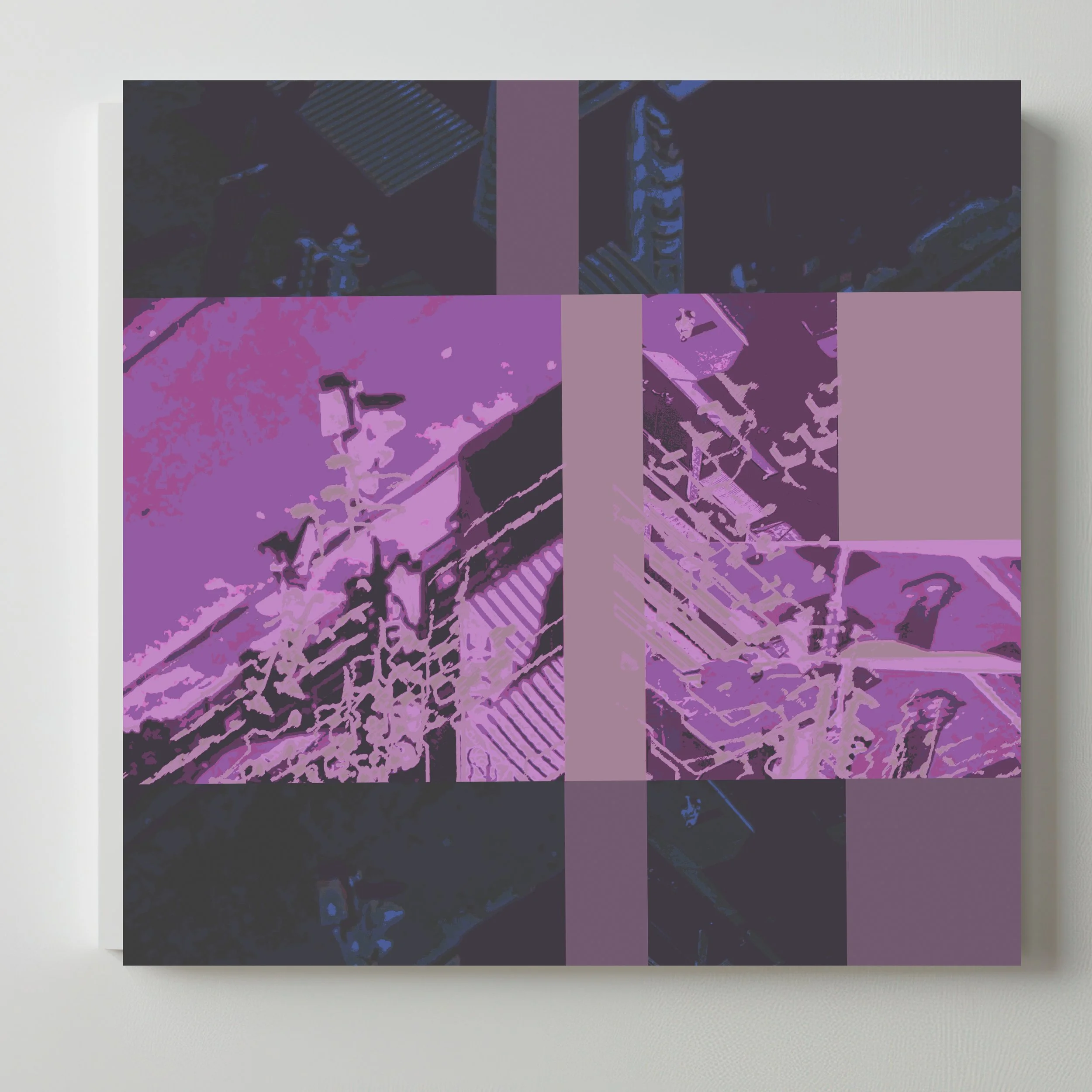
Chrome Side 1 | 2024| CPrint
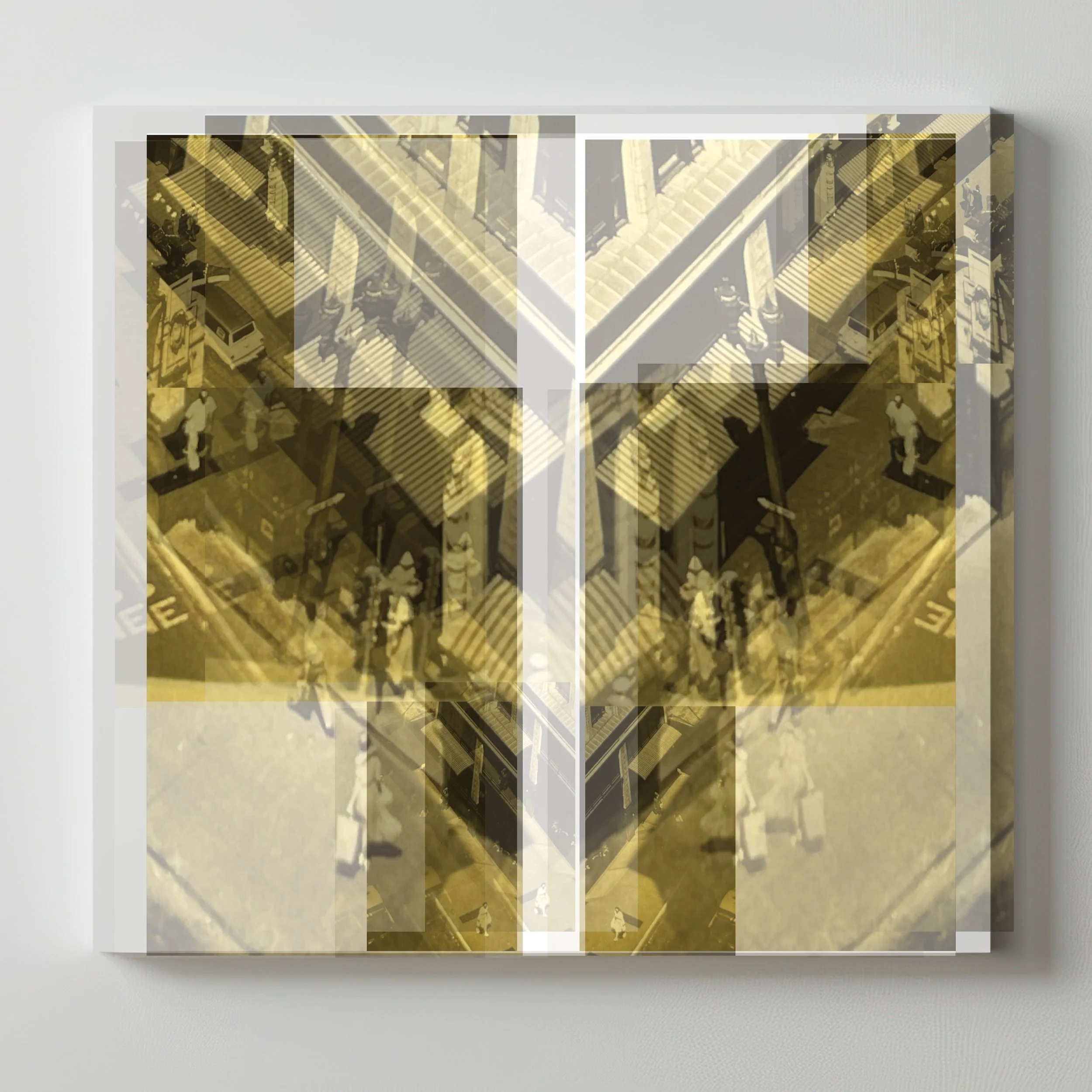
Chrome Side 2 | 2023 | CPrint
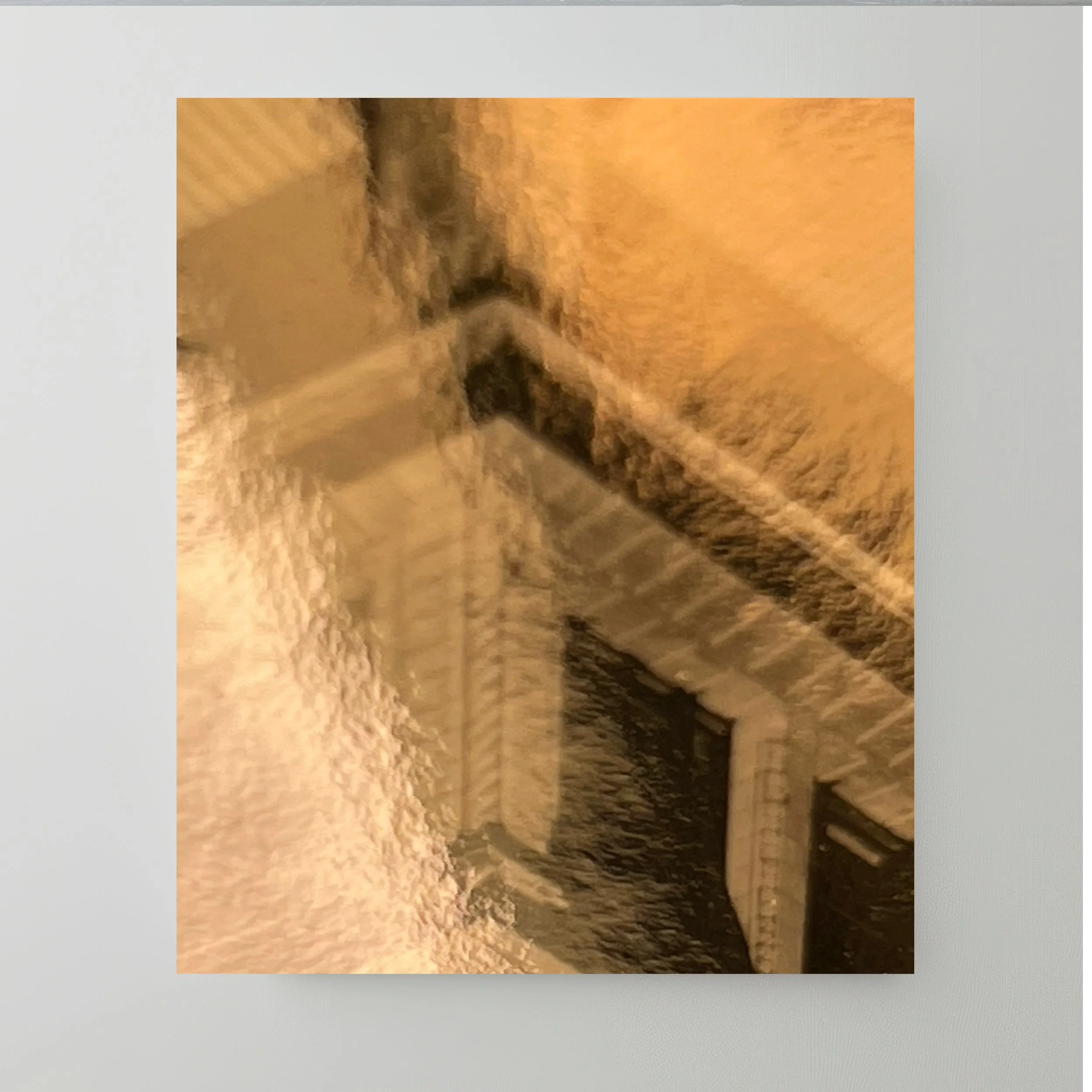
Still From "Building Arcival Drone" | 2024
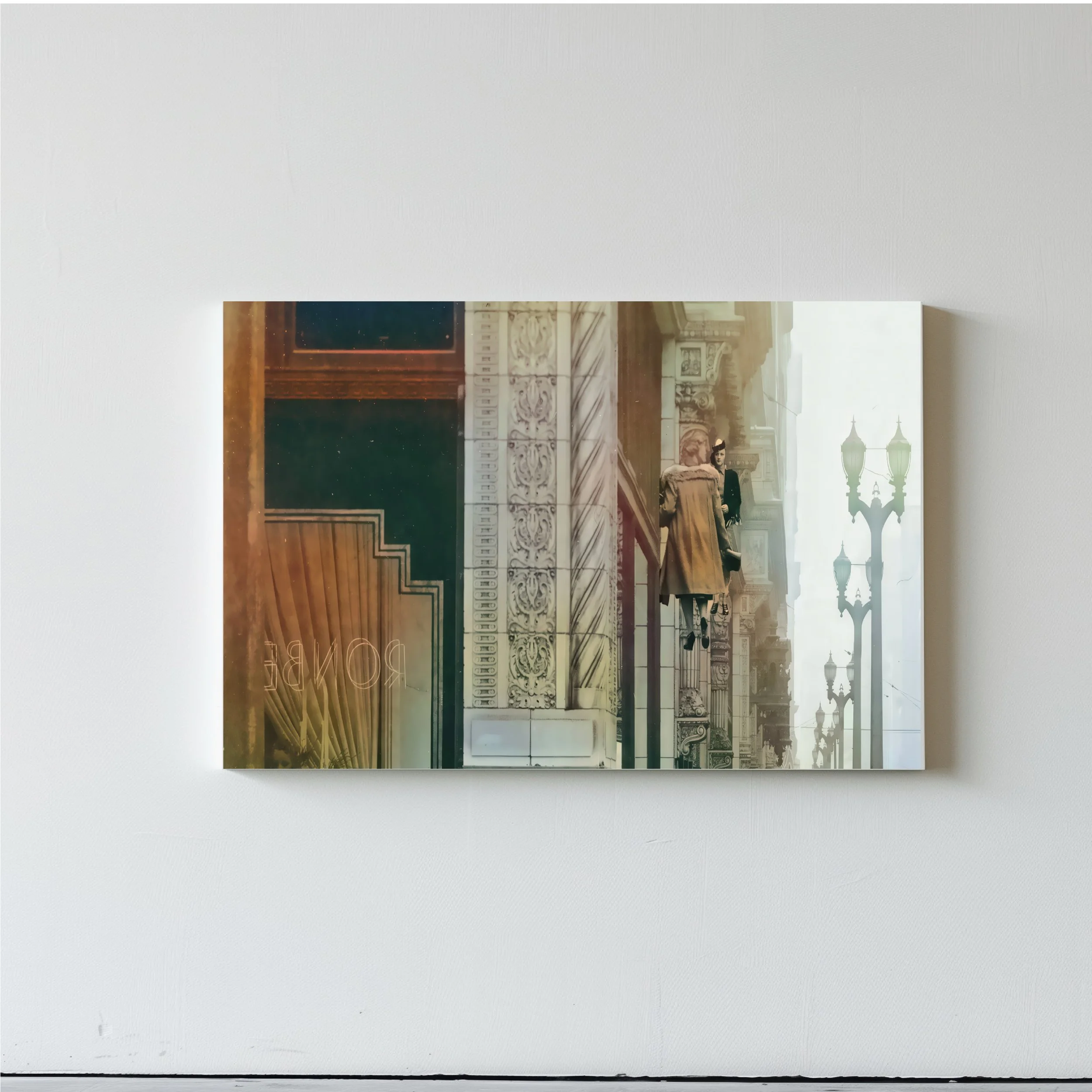
Escalatior | 2024 | CPrint
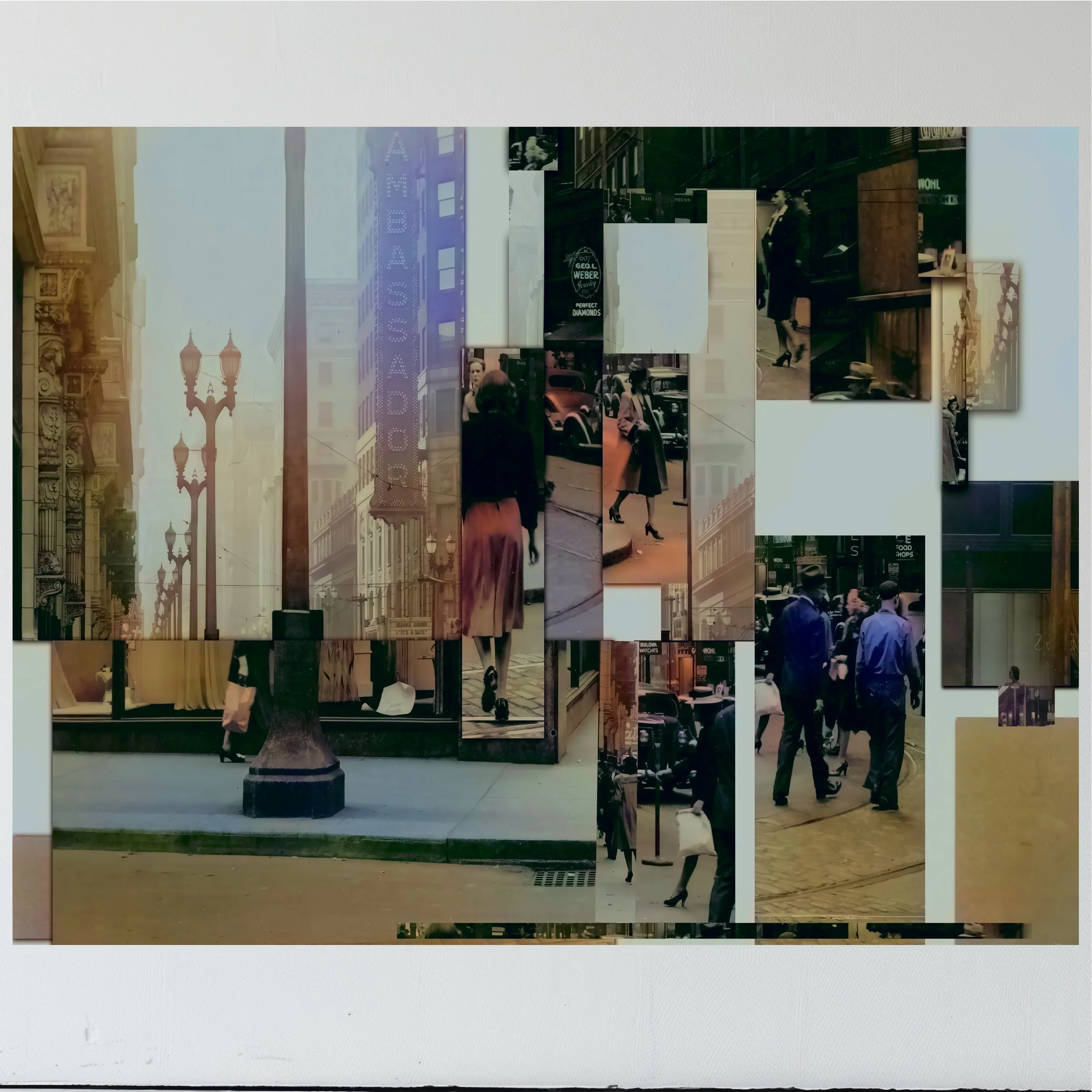
Carmepixel | 2023 | C Print
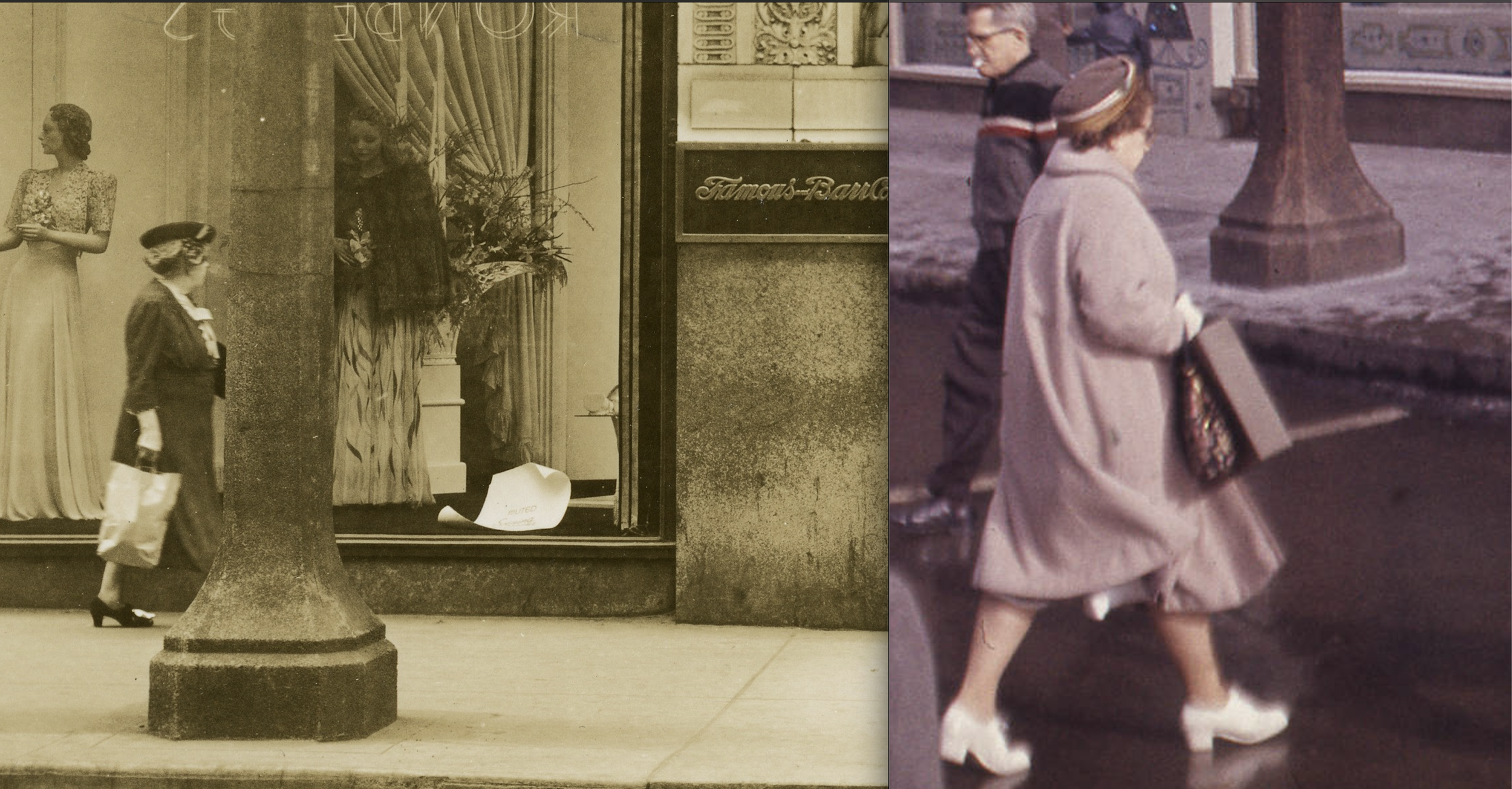
Lady in Mules 1 | 2023 | C Print
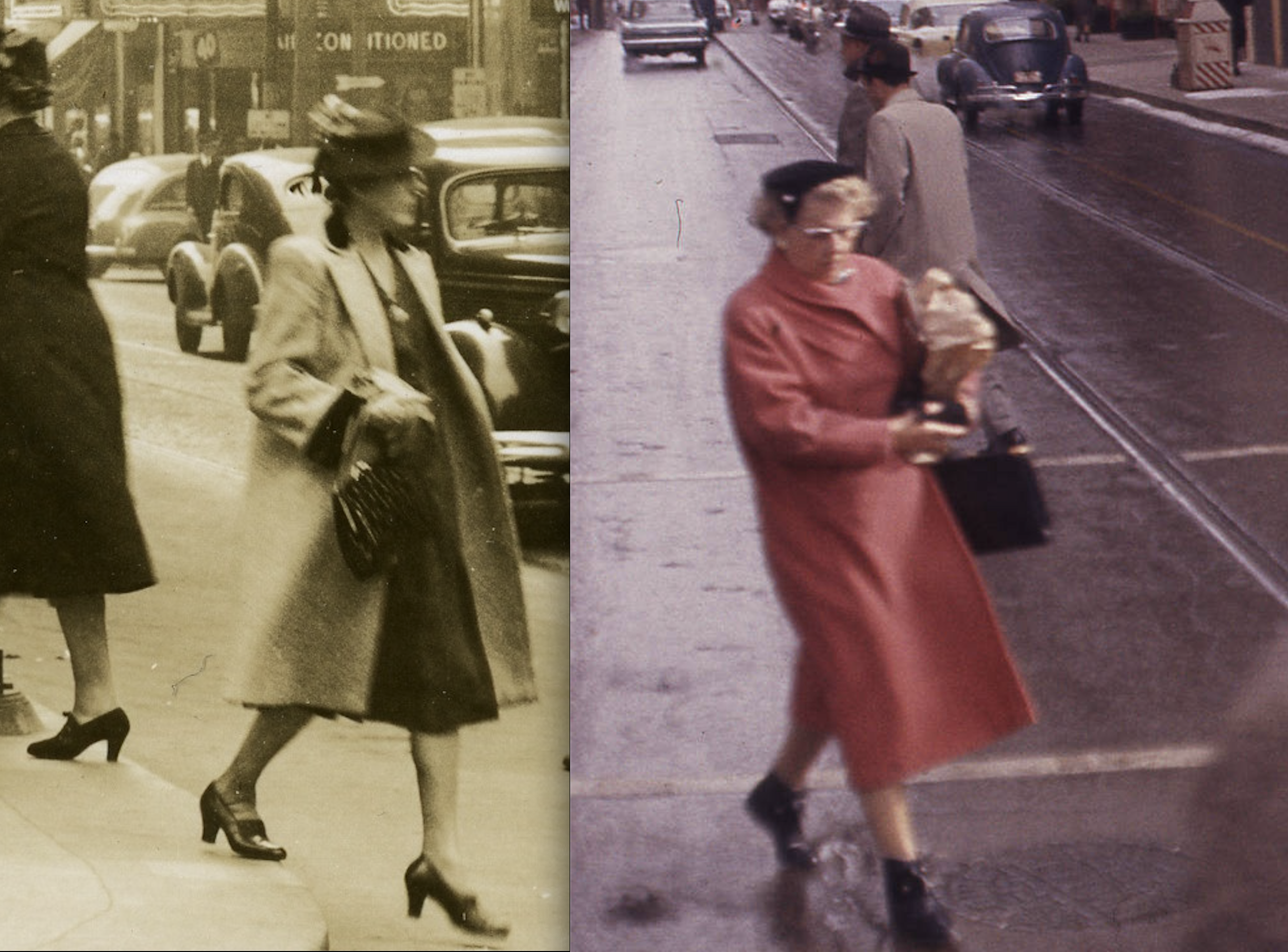
Alayes with Cap | 2023| C Print
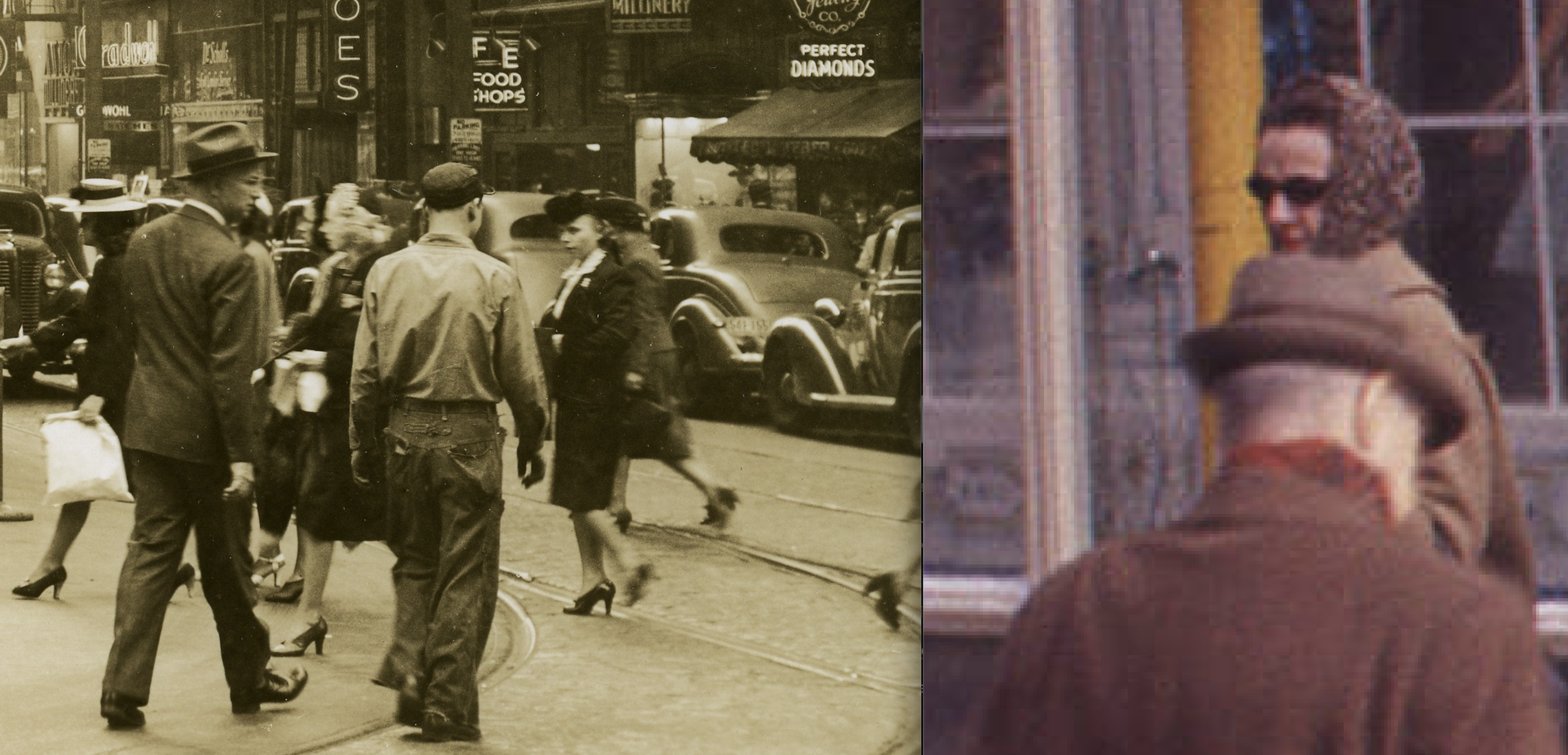
Same Look | 2023 | C Print